The Evolving Venturi Effect in Formula 1: Modeling RC Fan Cars
In 1978 the Brabham BT46B won its only race by sucking itself onto the track, then was withdrawn. I recreated it at RC scale: a 3D-printed vacuum tray seals the underbody, a fan evacuates the air, and a U-tube manometer measures what the ground effect is actually worth.
Seal the floor, evacuate the air
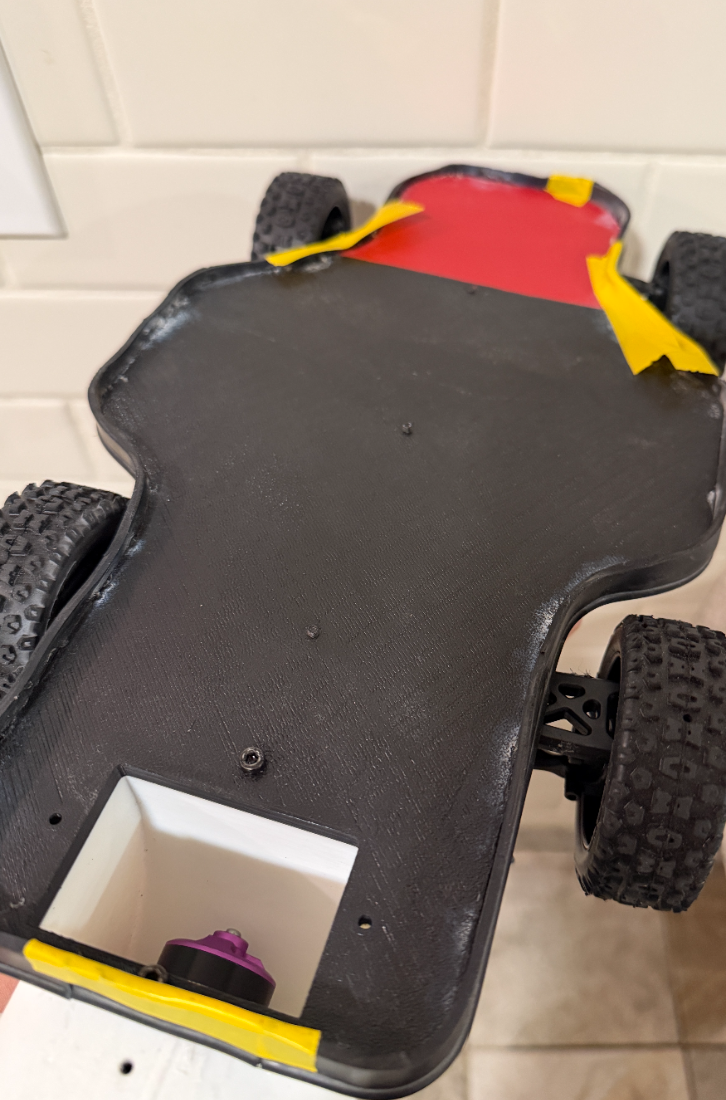
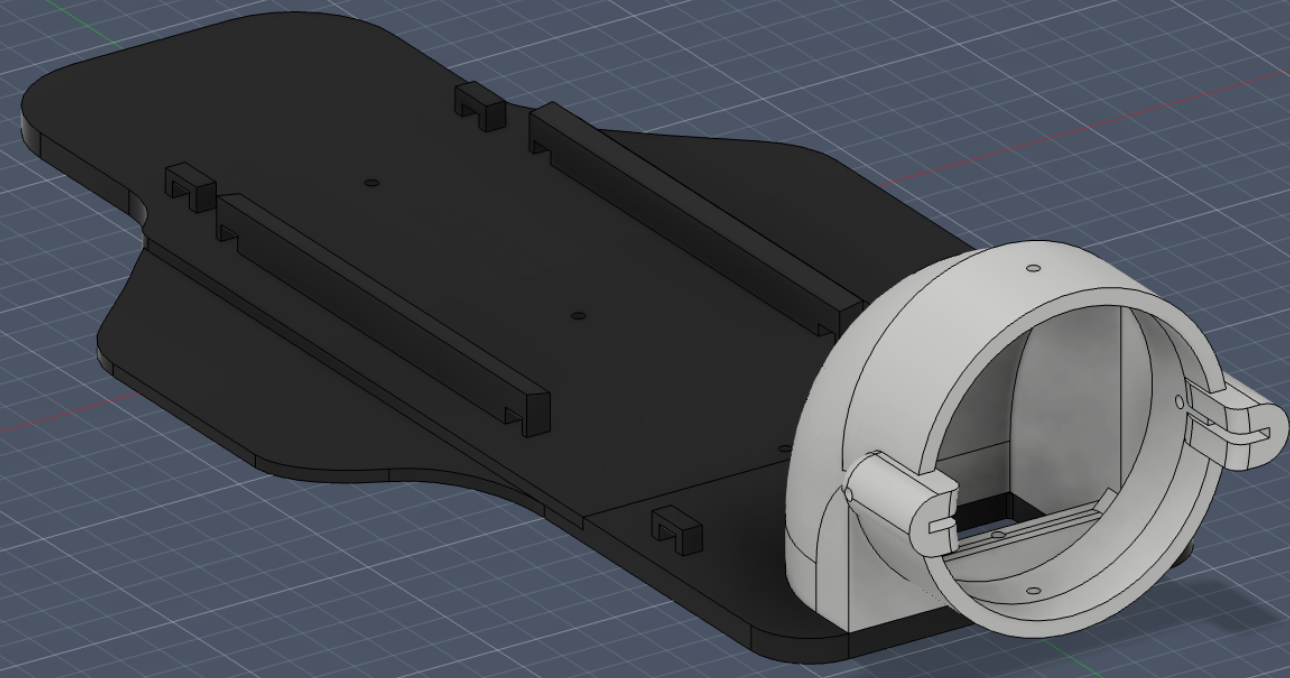
The vacuum tray is designed and 3D-printed to hug the chassis outline; skirts seal the gap to the ground, and the fan pulls air out from beneath the car. Lower pressure under the floor than above it: downforce without wings, at any speed, including zero.
Faster on the corners, slower in the straights
Through static testing with a U-Tube manometer, the car was found to generate a downforce of ~5 lbs (equivalent to the car's weight itself). Real-world testing against an unmodified car showed a 10% drop in acceleration but a 50%+ increase in average speed through a 90-degree corner.
Manufacturing this vehicle strengthened my understanding of efficient CAD modelling, fluid dynamics, and real-world engineering tradeoffs.